WHAT DOES GUM DISEASE LOOK LIKE?

Got questions about recognizing gum disease and the periodontal care steps you can take to avoid gum disease? You’re in the right place. In this blog from Clear Smile Dental Studio, we’ll discuss the basics of gum disease and how to recognize it, and how you can avoid developing gum disease.

WHAT DOES GUM DISEASE LOOK LIKE? RECOGNIZING THE SIGNS & SYMPTOMS 

Broadly speaking, gum disease is broken up into three different stages of increasing severity. These are called “gingivitis,” “periodontitis,” and “advanced periodontitis.” Each one has different symptoms and indications, so let’s look at them now.

The first stage of gum disease, gingivitis, is completely reversible with proper periodontal care. Accordingly, it has relatively mild symptoms, usually including:

  • Swollen and inflamed gums
  • Dark red or purple gums
  • Gums bleeding when brushing
  • Halitosis (bad breath)

If left untreated, gingivitis will advance to periodontitis, a more advanced and irreversible stage of gum disease. You can still get periodontal care in Stamford to control the disease, but it’s not possible to completely eliminate gum disease after this stage. Its symptoms include:

  • Gum recession that makes your teeth look longer
  • Tender or painful gums
  • Sensitive teeth
  • Pain when chewing

Finally, advanced periodontitis occurs when gum disease has attacked and destroyed the gums and support structures of your teeth. It may be possible to save your teeth, but in many cases, they will need to be extracted and replaced. Signs of this condition include:

  • Loose teeth
  • Changes in your bite
  • A foul taste in your mouth
  • Pus forming between the teeth and gums
  • Lots of pain and discomfort when chewing and eating

PERIODONTAL CARE FOR GUM DISEASE – STEPS TO RESTORE YOUR ORAL HEALTH

There are a few things you should do if you think you have gum disease. Taking action right away can help you eliminate or control the infection, and keep your mouth healthy, so don’t delay. 

  1. See a dentist immediately – Your dentist in Stamford will usually recommend a “deep cleaning,” which is a periodontal treatment that eliminates bacteria from between your teeth and gums. Additional surgical treatments may be required if you need more periodontal care due to an advanced stage of gum disease.
  2. Brush and floss consistently – Proper brushing and flossing can help prevent gum disease entirely, and also helps keep it under control if you’ve already been diagnosed. Brush at least twice a day for two minutes, floss once per day, and follow any additional instructions your dentist gives you to improve your oral health.
  3. Change your lifestyle – Changing your diet, avoiding sugary drinks, quitting smoking, reducing alcohol consumption, and other such changes can help with gum disease. We recommend asking your dentist for recommendations and following their instructions.

KNOW THE SIGNS OF GUM DISEASE AND GET TREATMENT RIGHT AWAY

The sooner you get help for gum disease in Stamford, the more likely it is that you can get your condition under control. Immediate treatment always results in a better outcome for your case. So don’t wait. If you suspect you have gum disease, contact Clear Smile Dental Studio today. Dr. Kwon and Dr. Park have years of experience in periodontal care, and can provide you with the guidance and treatment you need for healthy gums.


Why does my dentist want to give me preventative fillings?

If you go to the dentist and they recommend that you get “preventative fillings,” you may be a bit confused about what this means. Aren’t fillings only meant to treat decayed teeth? Why would you need a filling if you don’t have a cavity? And is it really necessary to get a preventative filling? Get answers to all of these questions and more in this blog from Clear Smile Dental Studio

WHAT IS A PREVENTATIVE FILLING? 

As the name suggests, a preventative filing is intended to fill a tooth before a cavity has formed. This term is actually a bit of a misnomer. More accurately, preventative fillings are called “pit and fissure sealants.”

This procedure is sort of a cross between a dental filling and traditional dental sealants. In this process, Dr. Kwon will use a tooth-colored sealant material to fill up very deep pits and grooves within your tooth. Usually, this is glass ionomer composite (GIC), but some other materials may be used.

This differs from a filling because no tooth material is removed, and no decay is present. And it differs from a dental sealant because the entire tooth isn’t coated with sealant material. Only the pits and grooves within the tooth are filled, rather than the whole tooth. 

WHY WOULD I NEED A PREVENTATIVE FILLING?

It may seem silly to get a filling when you don’t have a cavity. But the reason to get preventative fillings is in the name! When applied properly and in a timely manner, they can protect your tooth from decay, and eliminate the need for a filling or a dental crown in the future.

Most of the time, preventative fillings are recommended when you have really deep grooves, fissures, or pits in your molars. The molars are meant to have these anatomical features, since they help crush and grind food.

But unfortunately, they can also be prone to cavities. It’s hard to clean these fissures and pits, so food particles, bacteria, and acid can build up and lead to cavities in the rear teeth. This is common in both kids and adults.

By getting a preventative filling, you can seal up these pits and grooves, ensure that your tooth is easy to clean, and completely avoid decay. This is a particularly good choice if you have a history of cavities, or you have genetically weak enamel that’s susceptible to decay.

Not only is the process of a preventative filling faster, cheaper, and less invasive compared to a traditional dental filling, but it also ensures that you’ll have an easier time keeping your teeth clean. So if your Stamford dentist recommends pit and fissure sealants, take their advice. It will save you time, money, and headaches in the long run!

NEED A PREVENTATIVE DENTIST IN STAMFORD? COME TO CLEAR SMILE DENTAL STUDIO!

At our dentists in Stamford, CT, Dr. Park and Dr. Kwon focus on conservative, preventative dentistry in Stamford, and we offer a wide variety of treatments including preventative fillings. With our help, you can keep your smile healthy, avoid cavities, and get peace of mind in Stamford. Contact us online or call Clear Smile Dental Studio at (475) 473-9873 to schedule your appointment.

INVISALIGN VS. BRACES – WHICH IS FASTER?

Exploring your options for a straighter smile in Stamford? You may be wondering if braces or Invisalign from Clear Smile Dental Studio in Stamford are right for you. 

Both cosmetic treatments can be used to correct problems with your smile and your bite, and Invisalign has the advantage of being more subtle, removable to brush and to eat, and better overall comfort for most patients.

But which treatment is faster? If you want the fastest results, should you choose Invisalign, or are traditional metal braces a better choice? Find out now in this blog as we discuss the treatment time of Invisalign compared to braces.

INVISALIGN IS USUALLY FASTER THAN BRACES IF YOU QUALIFY FOR BOTH TREATMENTS

The short answer is that Invisalign tends to be faster than braces if you are a good candidate for both treatments. In most cases, Invisalign takes around 20-22 sets of aligners, which are worn for about 2 weeks each. This means that the total treatment time is around a year for most people who choose Invisalign.

In contrast, braces usually require at least 12-18 months of treatment for similar cases. This is because the type of force used in Invisalign treatment moves all of the teeth at once, as a unit. Braces move all of your teeth individually. 

Of course, this can vary depending on your case. In some cases, Invisalign may take more or less time, and the same is true of braces. Everyone’s mouth is different. The only way to know how long each treatment will take is to consult with a Stamford dentist like Dr. Byungchul Park or Dr. Gitae Kwon at Clear Smile Dental Studio.

After your appointment, Dr. Park or Dr. Kwon will be able to provide you with an estimate on how long it will take to treat your smile with Invisalign and with traditional braces, allowing you to choose the right option for your situation. 

… BUT BRACES ARE MORE VERSATILE AND MAY BE NEEDED FOR COMPLEX CASES

Invisalign is faster than braces if you qualify for both treatments. But in some cases, you may not be a good candidate for treatment with Invisalign. If you have very severe bite problems or extremely misaligned teeth, Invisalign may not be an option for you.

Due to the way it works, Invisalign has some limitations, and can’t be used for all patients. Braces, on the other hand, can be used alongside other orthodontic appliances and even oral surgery to treat any problem with your bite or smile alignment.

If this is the case for you, braces are definitely a better option. Depending on the situation, it may be necessary to wear braces for up to 24-36 months, but at the end of your treatment, you will have a bright, beautiful, and healthy smile. 

READY TO LEARN MORE ABOUT INVISALIGN IN STAMFORD? CONTACT US TODAY!

If you’re wondering whether or not you’re a good candidate for Invisalign in Stamford, the team at Clear Smile Dental Studio is here to help. Dr. Park and Dr. Chun are Invisalign experts, and are standing by to serve patients throughout the Stamford area. To schedule your orthodontic consultation, just contact us online or give us a call at (475) 473-9873. We look forward to seeing you soon, and exploring your options for a straighter, healthier, and more beautiful smile. 

ROOT CANAL AFTERCARE: WHAT TO EXPECT

If you’re having excruciating tooth pain, you may be experiencing a tooth infection, or may have otherwise damaged your tooth’s pulp. Fortunately, root canal therapy in Stamford can relieve your pain in a single visit. A root canal procedure is no more painful than a routine dental filling because you are given a local anesthetic. While you may feel some pressure, you won’t feel any pain. 

Your tooth will remain numb for several hours and you may experience some mild pain or tenderness in the next few days that will gradually subside. To find out more about what to expect after a root canal procedure and how you can care for your tooth, read on.

PAIN & TENDERNESS

Root canals used to be synonymous with the word pain. However, old school dental techniques are no longer used, and modern dentistry has enabled us to perform this procedure painlessly. A root canal is meant to relieve your pain, not cause it.

While your mouth is numb, you won’t feel anything. However, once the anesthetic wears off, it’s normal to feel mild to moderate pain or tenderness in the first few days. If the pain is severe or does not go away, you should contact your Stamford dentist. 

Since the procedure involves making an access hole into the tooth, it may be a little tender and cause temporary tooth sensitivity. This can be relieved with over-the-counter pain relievers such as ibuprofen.

WAIT FOR THE LOCAL ANESTHETIC TO WEAR OFF

Local anesthesia can numb the mouth for 4-6 hours, so you mustn’t eat or consume any hot foods or liquids until your mouth is back to normal. When you chew or consume something hot while your mouth is numb, you can accidentally bite or burn yourself without realizing it. 

To prevent the risk of injury in an already sensitive area, it is best to wait it out and rest until your mouth is no longer numb. We recommend eating enough before your root canal procedure so you won’t get hungry too soon.

HOW TO CARE FOR YOUR TEETH

You will want to take it easy for the rest of the day and avoid strenuous activity. Intense exercise and sports can cause damage to your tooth’s temporary crown. Since your tooth may be quite sensitive or in pain in the first few days, you should be extra gentle with it and avoid chewing on this side of the mouth. 

Keeping the mouth clean is important to prevent infection. You can brush and floss your teeth like normal but be careful around the tooth that has received the root canal. Floss very gently and avoid being too forceful. When brushing your teeth, make sure you use a soft-bristle toothbrush and brush gently around the affected tooth.

WHAT YOU CAN EAT

Refrain from eating at all until the anesthetic has worn off. Once your mouth is no longer numb, you can consume soft foods, such as applesauce, mashed potatoes, and yogurt. It is also a good idea to refrain from consuming very hot or cold foods that can contribute to tooth sensitivity immediately after a root canal. 

Try sticking to room temperature foods and liquids at least for the first 24 hours. Do not eat hard, chewy, or sticky foods for the first few days. After a few days, once your tooth is less sensitive, and with the approval of your dentist, you can begin to reintroduce harder foods.

COMPLETING THE PROCEDURE AT CLEAR SMILE DENTAL STUDIO

Finally, it’s important to return to the dental office for any follow-up appointments or to complete the procedure if you have only received a temporary crown. At a separate appointment, you will receive a permanent crown to protect your tooth from damage and reinfection. 

The dentist will also perform an exam to check that you are healing properly and there is no sign of infection. To schedule an appointment with Dr. Byungchul Park or Dr. Gitae Kwon, contact us at Clear Smile Dental Studio today.

VENEERS VS LUMINEERS: WHAT’S BEST FOR ME?

If you want to upgrade your smile, veneers are a popular solution for many people. However, if you’ve been researching veneers, then you’ve most likely come across another similar solution: Lumineers. But what is the difference between these two? And, most importantly, which ones are right for you? Find out these answers in this blog post from Clear Smile Dental Studio.

WHAT ARE VENEERS?

Veneers are a type of protective coating placed on the front of your natural teeth to restore and upgrade their look. This porcelain covering gives off the picture-perfect smile many patients desire: white, shiny, and bright.

To place veneers, your Stamford dentist will have to shave off the top layer of the natural tooth enamel. This is necessary so that the veneers can properly fit on your teeth. Because of this procedure, veneers are considered an irreversible treatment, as enamel does not grow back. 

As a result, once you get veneers you cannot go back to your natural teeth and will either have to get new veneers down the line if they break, or opt for a different cosmetic procedure.

WHAT ARE LUMINEERS?

Lumineers are actually a brand name for a type of veneer. The difference between them and most standard veneers is the Lumineers are a bit thinner, which means they require less or even no shaving of the tooth’s enamel. 

Lumineers are around 0.2 mm and made from laminate, as opposed to traditional veneers which are made from porcelain and are around 0.5mm in thickness.

Because of this difference, Lumineers are often called “no-prep” veneers, as they can be added to the natural tooth without trimming. Unlike veneers, Lumineers are semi-permanent, and can be removed with little to no damage to your natural tooth.

WHICH COSMETIC OPTION IS RIGHT FOR ME?

Broadly speaking, veneers and Lumineers from our Stamford dental office share many of the same qualities:

  • Durable, and both can last as long as 20 years
  • Long-term cosmetic solution
  • Perfect for addressing tooth discoloration, staining, certain tooth shape issues, etc.

Deciding between veneers and Lumineers often comes down to the long-term dental goals you have. Specifically, if you want a ‘no turning back’ kind of solution, then veneers are the right choice. If you’re not sure if you want to commit to this type of procedure and would prefer something reversible, the Lumineers are a good fit.

However, your dental health may also factor into the decision making process. Your cosmetic dentist will help you make the right choice during your consultation.

BOOK AN APPOINTMENT AT CLEAR SMILE DENTAL STUDIO IN STAMFORD

If you’re wondering whether veneers or Lumineers are right for you, we at Clear Smile Dental Studio are happy to help. Our cosmetic dentistry services in Stamford can give you that picture-perfect smile you deserve!

Book your first consultation online with Dr. Park or Dr. Gita today to get started.

HOW TO TREAT SENSITIVITY AFTER TEETH WHITENING

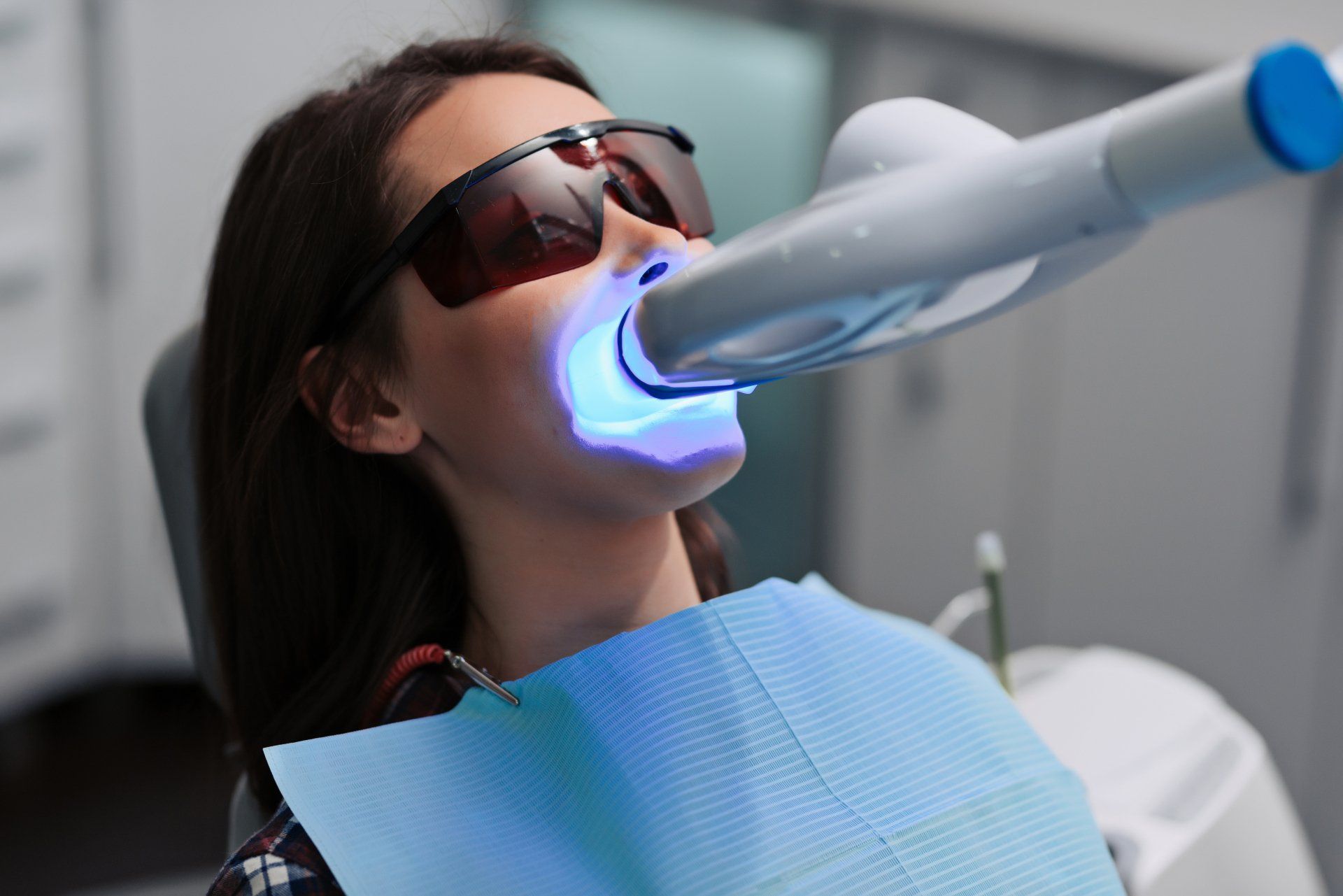
If you’re having your teeth whitened in Stamford at Clear Smile Dental Studio, you may already know that minor teeth sensitivity is common for a few days after your appointment. How can you deal with this, and stay comfortable after you’ve had your teeth whitened? Let’s go over our top 5 tips. 

1. LET YOUR DENTIST KNOW IF YOU HAVE SENSITIVE TEETH

First, you should let Dr. Kwon or Dr. Park know if your teeth tend to be sensitive. Patients who already have sensitive teeth can have more severe sensitivity after teeth whitening. But the good news is that there are ways that Dr. Kwon or Dr. Park can help with this.

For example, they may use a less intense whitening compound, schedule multiple appointments for your comfort, or use special desensitizers to keep you comfortable during and after your treatment. If you’re sensitivity-prone, make sure to tell your Stamford dentist before your appointment! 

2. SWITCH TO ANTI SENSITIVITY TOOTHPASTE LIKE SENSODYNE

Anti sensitivity toothpaste like Sensodyne contains special ingredients that help reduce sensitivity from all sources, including whitening-induced teeth sensitivity. If you’re worried about sensitivity, switching to anti sensitivity toothpaste a few days before your treatment and using it after your treatment is a good idea.

3. MAINTAIN A GOOD ORAL HYGIENE ROUTINE

You should continue brushing at least 2-3 times a day for at least 2 minutes, using fluoride toothpaste. Fluoride helps rebuild the enamel and strengthens it, which helps reduce whitening-induced teeth sensitivity. 

If brushing your teeth hurts, you may also want to switch to a brush with very soft bristles. Swapping from an electric toothbrush to a manual toothbrush might also help, since the vibrations of an electric toothbrush could cause some discomfort.

4. AVOID REALLY HOT OR COLD FOODS AND DRINKS

Avoid drinking boiling hot coffee or tea, and skip the ice cream. Sensitivity is worse with really hot and cold foods or drinks, so changing your diet and habits for a few days will help you cope with your sensitivity more easily.

5. TAKE OVER-THE-COUNTER PAINKILLERS

Over-the-counter pain medication like ibuprofen, naproxen, or acetaminophen can help with tooth sensitivity. You can take pain medication before your whitening appointment, and continue to take it as directed on the package after your whitening treatment is complete. 

If you are experiencing a lot of sensitivity right after your treatment, you may also want to look into topical treatments like Orajel. These can numb your gums and teeth slightly, which helps you deal with sensitivity. 

READY FOR A BRIGHTER SMILE? CONTACT CLEAR SMILE DENTAL STUDIO TODAY!

At Clear Smile Dental Studio, Dr. Kwon and Dr. Park are standing by to help you get the smile you deserve in Stamford. Teeth whitening is an excellent way to reverse stains and get started with cosmetic dentistry in Stamford. So if you’re interested in a brighter smile, don’t wait. Contact us online or give us a call at (475) 473-9873. We’re always accepting new patients.

HEALING PROCESS AFTER DENTAL IMPLANTS: WHAT TO EXPECT

Dental implants are the single best tooth-replacement system in dentistry. It is the only method of tooth replacement that preserves the jaw bone and prevents further bone loss. Other restorations in Stamford such as dentures and dental bridges do not last for nearly as long and are limited in functionality and convenience.

Dental implants can last for a lifetime with proper oral care, except for replacing the crown that is attached to the implants. Unlike dentures and dental bridges, you are free to eat what you want and they require no extra maintenance other than how you would normally clean your teeth.

In this blog from Clear Smile Dental Studio in Stamford, we’re going into depth about the dental implant healing process. To learn more about how long it takes to heal, what to expect, and aftercare protocols, read on.

DENTAL IMPLANT PROCEDURE & HEALING TIME
The implant procedure takes place in 3 different steps, requiring healing time and osseointegration in between.

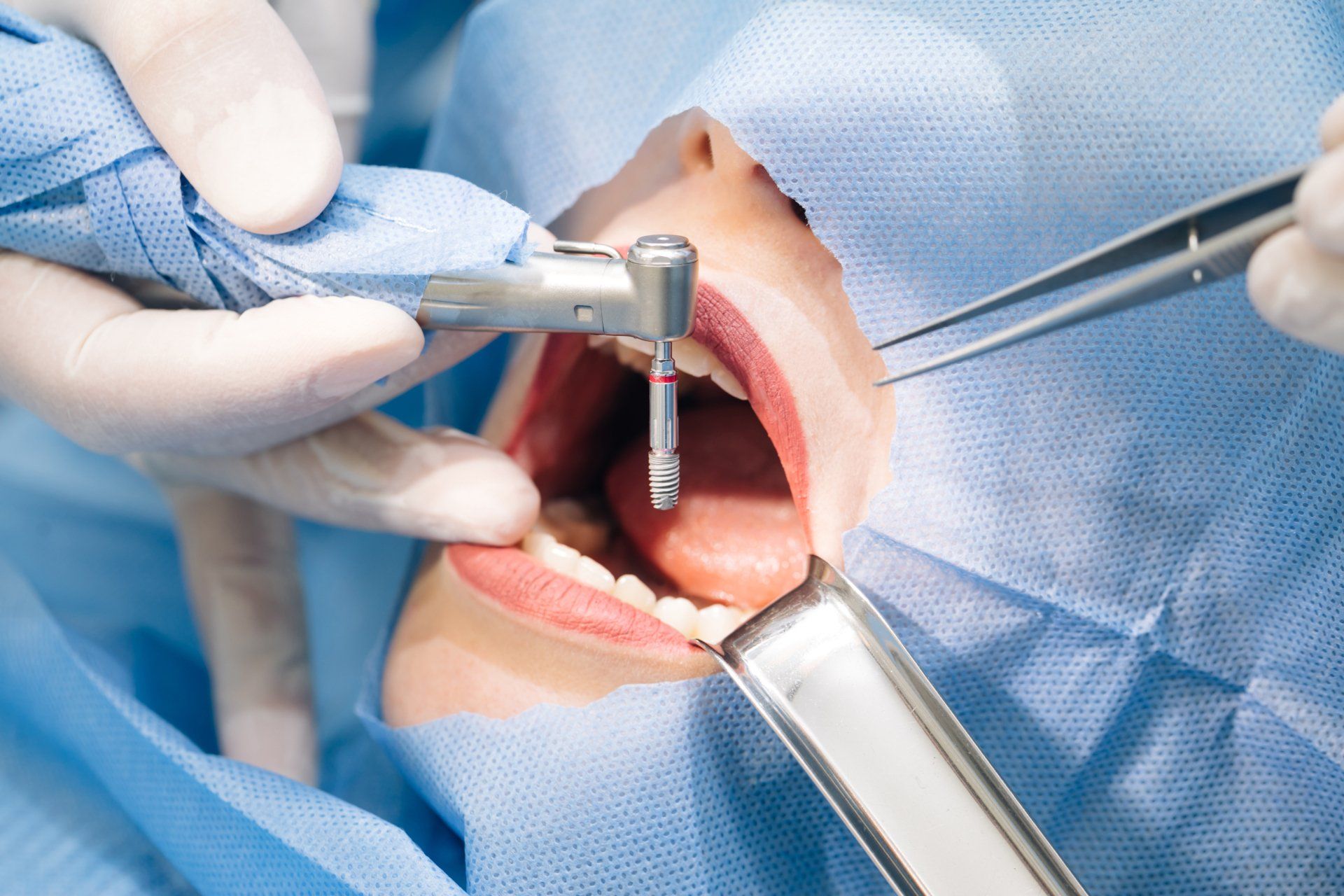
First Appointment: You will be given a local anesthetic so you don’t feel any pain. An incision will be made into the gums and the jawbone will be drilled into before implanting a titanium rod into the jawbone. You will need 2 weeks to heal from this minor surgery but 3-6 months for osseointegration in which the implant fuses with the jawbone. 

Second Appointment: After you have healed and the implant has fully fused with the jawbone, you will return to Clear Smile Dental Studio for a second small oral surgery. The gums will be reopened to attach an abutment to your implant. 

The abutment screws onto the implant and will be used to attach your crown to the implant 6 weeks from now. It will take up to 2 weeks to heal from this second surgery. Scans and x-rays will be taken of your teeth to create a tooth restoration that perfectly matches your natural teeth. 

Third Appointment: Six weeks later, your crown should be ready to be attached to your abutment and fitted into your mouth. You want to ensure that the crown feels comfortable and fits properly inside of your mouth. 

In the long dental implant process, this step is the simplest, requires no surgery or anesthetic, and will cause no pain. After your crown is placed, you will be able to enjoy your new fully functional teeth and can clean them like normal.

FACTORS THAT IMPACT HEALING TIME AFTER IMPLANTS

Everyone heals at their own pace and factors such as bone health and how many implants were received can have a big effect on how long it takes for your implants to heal. Keep in mind that despite how fast or slow you heal from the oral surgery, the process of osseointegration will still be slow.

Osseointegration is also variable but will take a minimum of 3 months. The following factors can affect how long it takes for your mouth to heal and prolong the process:

  • Smoking
  • If you required bone grafts
  • If you required multiple implants
  • Have inadequate bone structure or bone health
  • Not following the aftercare advice provided by your dentist
  • Not practicing good oral hygiene

WHAT TO EXPECT DURING THE HEALING PROCESS

You can expect to experience some bleeding and swelling immediately following the oral surgery. While this is normal, excessive bleeding for a prolonged period should be taken seriously and you should contact your dentist in Stamford about this right away to make sure you don’t have mucositis or peri-implantitis.

Immediately following your implant procedure, you will need to bite down on some fresh gauze for 30 minutes to an hour to stop the bleeding. Swelling can be reduced with the use of ice packs and saltwater rinses. 

Ice packs can also reduce swelling and you may need anti-pain medication once the local anesthetic wears off. You will need to stick to soft, cool foods initially and over a few days, you can start to introduce your regular diet back into your routine. Try to avoid chewing on the side of the implant and follow your dentist’s instructions on brushing and flossing.

INTERESTED IN DENTAL IMPLANTS IN STAMFORD?

Wondering if dental implants would be a good option for you? Contact us at Clear Smile Dental Studio for an exam and evaluation. Schedule a consultation with Dr. Byungchul Park or Dr. Gitae Kwon in Stamford today to see if you’d be a good candidate and restore the function and appearance of your smile.

WHAT TO LOOK FOR IN A DENTAL IMPLANT SPECIALIST

Interested in dental implants in Stamford? Getting implants is a complex and relatively expensive procedure that takes multiple dental visits and a long healing and recovery period, so it’s important to make sure you choose the right dental implant specialist for your treatment.

But how can you know whether an dental implant specialist Stamford will offer great care? That’s a great question, and in this blog from Clear Smile Dental Studio, we’ll discuss the top things you should look for while you search for a dental implant specialist.

1. A FRIENDLY, APPROACHABLE DENTAL TEAM‍

Getting a dental implant involves several checkups and follow-ups throughout the procedure, so you’ll be working with your dental team closely during this time. For that reason, you should choose a dental team that’s friendly, approachable, and will discuss everything you need to know about the implant procedure.

This will help you get your dental implant treatment with confidence. It also doesn’t hurt to choose a local Stamford dentist who is close to your home or work, since this makes your frequent visits much more convenient! 

2. DEEP EXPERTISE IN IMPLANT DENTISTRY‍

Technically, any dentist can learn to place dental implants without a special degree or certification. But some dentists have more experience and training than others when it comes to implant dentistry.For example, Dr. Gitae Kwon is a faculty member at GIA – Gangnam Implant Academy, where he uses his years of expertise to provide continuing education to other dentists on the topic of dental implant surgery. 

3. OPTIONS FOR SINGLE-TOOTH, PARTIAL, AND FULL-MOUTH RECONSTRUCTION‍

Some implant dentists only offer single-tooth dental implants, which uses a dental crown to restore one missing tooth. 

If you have complex dental health issues, you should look for a Stamford dentist who can offer other treatments, such as implant-supported dental bridges to restore multiple missing teeth. Similarly, research a dentist who can execute a full-mouth reconstruction, which uses a set of implant-supported dentures to replace an entire mouth of missing teeth. 

4. EXCELLENT PATIENT REVIEWS & TESTIMONIALS‍

Looking at online reviews and testimonials from previous patients helps you get an idea of an implant specialist’s approach to dentistry. You’ll be able to learn a bit more about what they do, what previous patients thought of their experience, and other relevant details. 

5. FINANCING OPTIONS FOR YOUR TREATMENT‍

Dental implants are a big investment, so it can be helpful to find a dental implant specialist that offers financing options to split up the cost of your treatment, such as CareCredit, LendingClub and Compassionate Finance.

We offer all of these financing options at Clear Smile Dental Studio, and we also work with all major insurance providers, though coverage is usually limited or unavailable for dental implants. Learn more here and see how we can help you budget for dental implants in Stamford.

DON’T KNOW WHERE TO START? COME TO CLEAR SMILE DENTAL STUDIO FOR A FREE CONSULTATION!‍

At Clear Smile Dental Studio, we offer a dental implant special for a free consultation and $1,000 off your treatment if you’re approved for implants. 

Dr. Park and Dr. Kwon are experienced implant dentists, and can provide you with the expert dental care you need to restore your smile permanently. So don’t wait. If you’re interested in dental implants in Stamford, just contact us online or give us a call at (475) 473-9873 today.